AI Contract Comparison for Faster Procurement Review
Manual contract comparison can become a procurement bottleneck. When supplier onboarding depends on understanding a new draft, side-by-side reading can delay the questions, approvals, and legal review that follow.
Arthur & Co provides the AI contract comparison workflow. Upload a baseline and a new draft to get a structured view of detected deviations, risk priorities, and questions for human review.
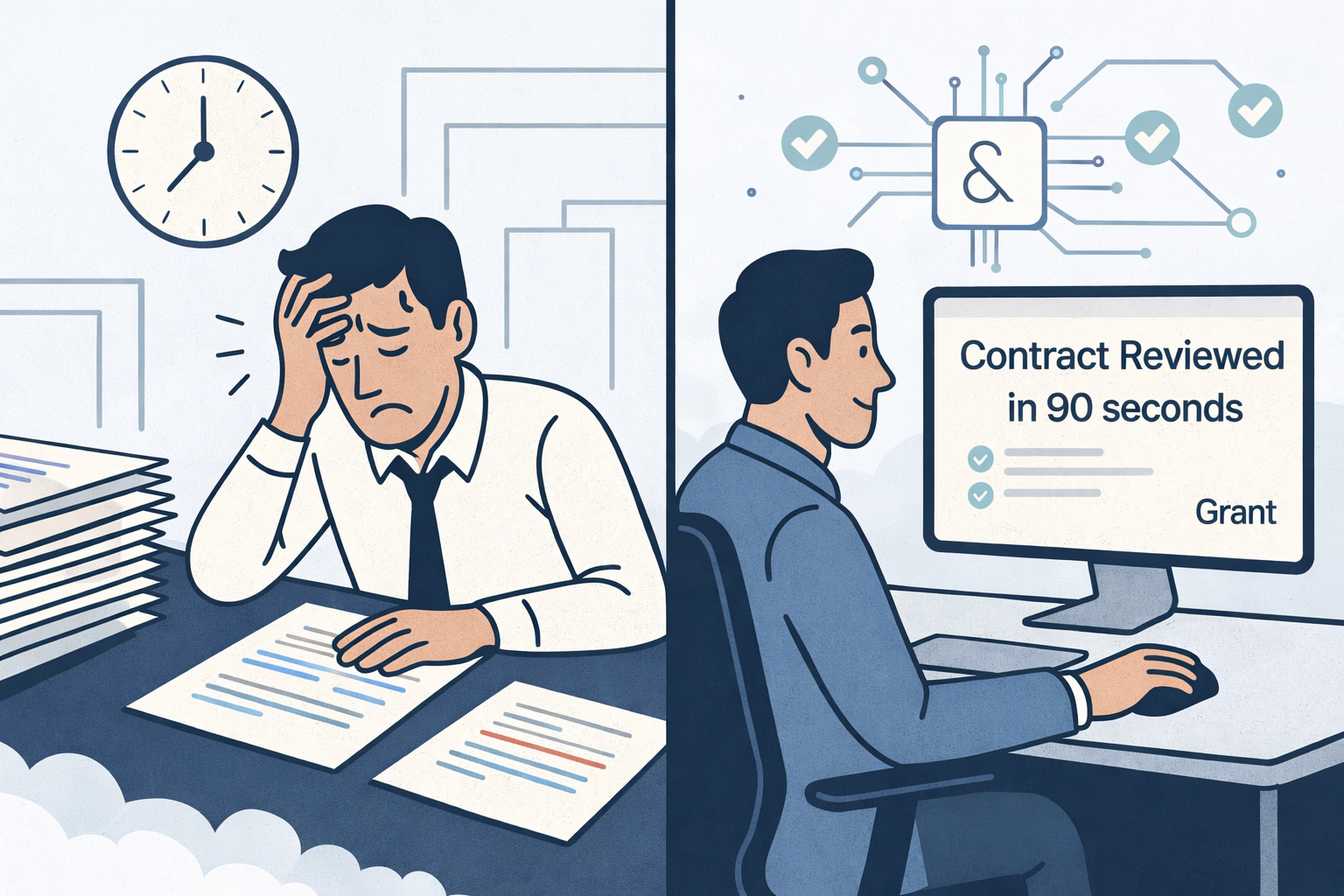
Why Contract Comparison Delays Matter
Slow contract reviews can affect supplier onboarding and commercial decisions:
- Quarter-end crunch often pushes deals into the next period, slowing revenue recognition.
- Vendors prefer buyers who clear paperwork fast, often translating to better terms or service.
- One missed clause, such as a subtle change in indemnification or liability, can wipe out margin for years.
Arthur & Co reduces undirected redlining by presenting detected changes in a structured comparison. Reviewers still need to verify the findings against both source contracts before acting.
How an AI Contract Comparison Tool Works
Arthur & Co's AI Contract Comparison workflow reduces line-by-line comparison. It parses the uploaded contracts, identifies detected deviations from the baseline, and organises risk-relevant changes for review.
This AI Contract Analysis process, detailed on our features overview page, is a four-step cycle:
| Step | What Happens | Your Benefit |
|---|---|---|
| Parse and Map | The workflow analyses each uploaded contract and organises content for comparison. | Less manual searching across both documents. |
| Detect Deviations | The workflow compares the vendor draft against the uploaded baseline. | Flags detected edits, rephrasing, and omissions for review. |
| Prioritise Review | Detected deviations are organised with Risk & Compliance Insights. | Helps reviewers focus on the changes that need closer attention. |
| Explain in Plain English | Summaries and Clause-by-Clause Annotations show why a flagged difference may matter. | Gives procurement and legal teams a clearer first pass for review. |
This structure goes beyond a visual redline by connecting detected changes with the decision the reviewer needs to make.
7 Contract Types to Compare Against a Baseline
The workflow supports the file types and limits shown on its upload screen. If you have a baseline and a third-party contract, you can compare common business agreements; long, scanned, unusually formatted, or complex contracts require additional care.
You can upload and compare a variety of vendor agreements, including:
- SaaS subscriptions and renewals.
- IT hardware and maintenance (part of IT procurement agreements).
- Marketing services and agencies (part of vendor agreements).
- Logistics and 3PL agreements (part of logistics-related contracts).
- Cloud infrastructure (IaaS/PaaS agreements).
- Professional services or SOWs (part of procurement documents).
- Indirect procurement frameworks (for Procurement Teams).
The result is a structured first-pass comparison for review. Reviewers should confirm flagged changes against the source contracts before making decisions.
Workflow Head-to-Head: AI vs Manual
Manual and AI-assisted review allocate work differently. Manual review asks a person to find and organise every difference; the AI-assisted workflow prepares detected changes so the person can focus on verification and judgement.
| Feature | Manual Review | Arthur & Co AI Contract Analysis |
|---|---|---|
| Review Time | Varies with length and complexity. | Findings are organised in a structured comparison view. |
| Change Detection | A reviewer must identify and organise each difference manually. | Detected changes are grouped for human review and verification. |
| Risk Detection | Relies on individual expertise and intuition. | Uses Risk & Compliance Insights to help surface review priorities. |
| Scalability | More documents require more first-pass reading. | A repeatable workflow makes the first pass easier to organise. |
| Collaboration | Slowed by manual legal handoffs. | Provides clear summaries for Legal & Compliance. |
How Teams Use Comparison Results
The practical return from AI Contract Comparison depends on contract volume, complexity, and how the team uses the findings.
The clearest operational benefit is a better handoff. Procurement can send legal a prioritised list of detected deviations and supplier questions instead of two unstructured documents. Teams should measure their own review time, escalation rate, and corrected findings rather than relying on a universal savings claim.
Watch Risk Radar in Action
See how the contract-comparison output is organised:
- Upload your baseline template.
- Upload the vendor draft.
- Click Compare.
- Review deviations, Strategic Questions, and plain-English insights.
- Export the PDF summary for stakeholder review or approval records.
Watch the walkthrough to see deviation highlights and the review flow:
Conclusion
Manual contract comparison can be slow and inconsistent. AI Contract Comparison gives the reviewer a structured first pass of detected deviations, risk priorities, and questions. Human verification, legal judgement, and approval remain essential.