When a supplier statement doesn't match your ledger
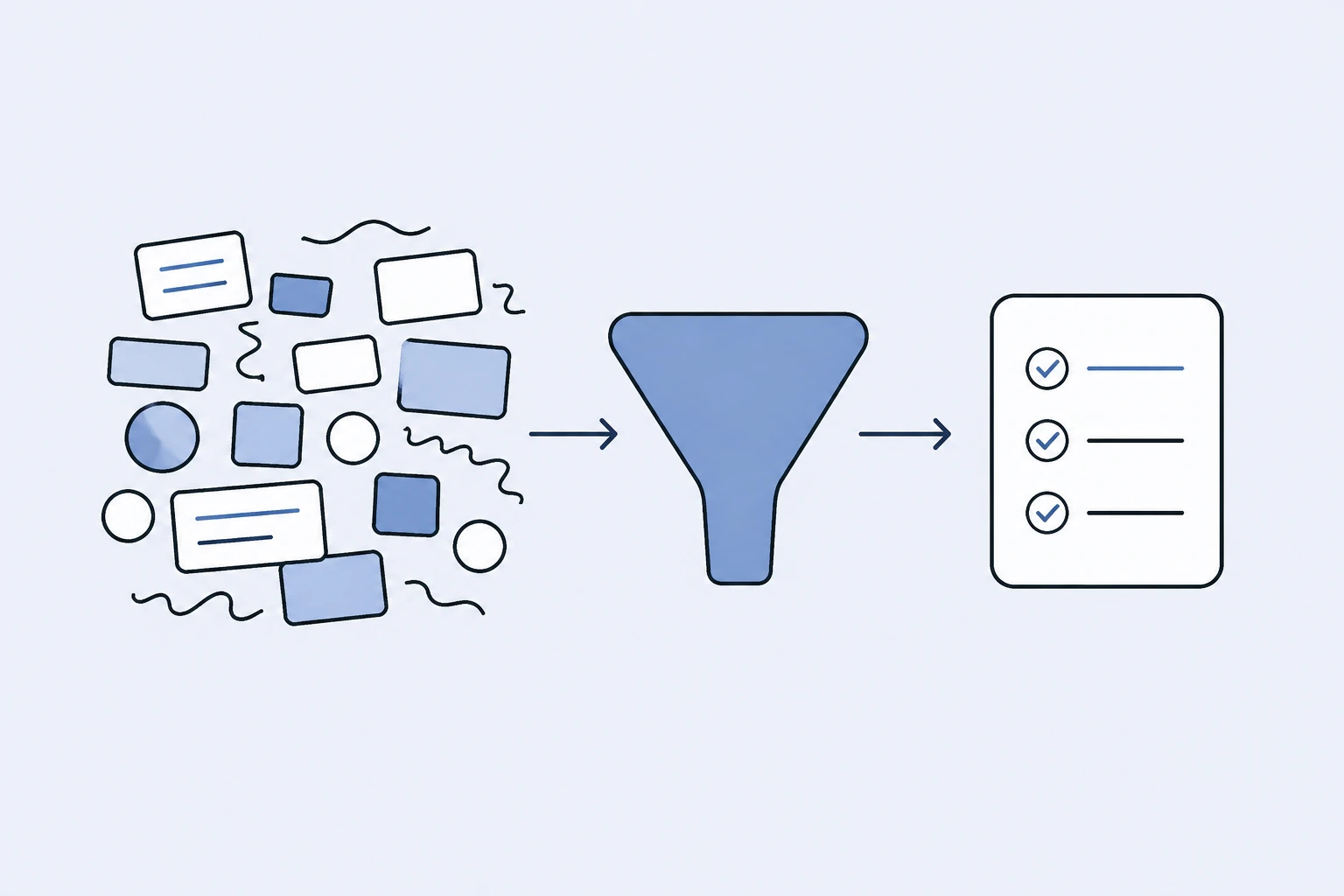
Your supplier statement does not match the ledger, and the unmatched list is longer than expected. The next job is to explain each difference without losing track of the evidence. A missing credit, a payment in transit and an invoice recorded twice require different follow-up.
Keep the original references and amounts, separate what you know from what you suspect, and assign a next action. That turns supplier reconciliation exceptions into a review queue instead of another spreadsheet full of unexplained notes.
Confirm that the difference is real
A statement dated month-end and a ledger containing later entries can disagree for an ordinary timing reason. Different supplier accounts, currencies or opening balances can also make otherwise correct lines look unmatched.
Before contacting the supplier, confirm those basic dimensions. Keep a copy of the export used in the comparison; a live ledger may change while you investigate. If you need the full matching method first, follow the supplier statement reconciliation guide.
Then inspect the source values behind the exception. A reference may include a prefix in one record and not the other. A debit can be represented as a signed amount or as a value in a separate column. Resolve interpretation issues before deciding that a business transaction is wrong.
Work through common supplier reconciliation exceptions
| Exception | Check first | Evidence to request | Next action |
|---|---|---|---|
| Credit on one side only | Date, account and invoice allocation | Issued credit note | Confirm the credit and where it belongs |
| Payment absent from statement | Cutoff and payment reference | Remittance and supplier allocation | Confirm receipt or carry a timing item |
| Invoice absent from ledger | Entity, duplicate reference and receipt | Original invoice and related order | Investigate the missing record |
| Same reference, different amount | Currency, tax basis and partial credit | Invoice, amendment or credit | Explain the amount difference |
| Possible duplicate | Repeated document versus repeated transaction | Both source entries | Establish whether two liabilities exist |
This table is an investigation aid. It does not replace your finance team's review of the underlying documents or authorize a payment or accounting change.
A credit note is missing from one record
Suppose the supplier statement includes a €100 credit, but your ledger does not. First check whether it was received after the ledger cutoff, recorded under another reference or allocated to another account. Search by amount as a secondary check, not as proof of identity.
Request the credit note itself if you only have the statement line. Record the original invoice reference and whether the credit is partial. A €100 credit against a €600 invoice does not imply that the credit is incomplete; it may relate to a specific returned item or adjustment.
For the opposite case—a credit in your records but not on the statement—ask whether the supplier has issued and allocated it. Keep a disputed credit separate from an agreed one so the closing balance explanation does not imply confirmation that you do not have.
A payment is missing or allocated differently
Compare the payment date, bank reference and supplier account. A remittance can group several invoices into one transfer, and the supplier may allocate that transfer differently from your ledger.
In a fictional example, your ledger records a €250 payment on 31 August. The supplier statement at that date omits it. Evidence that the supplier received it on 2 September explains a timing difference; it does not call for entering the same payment again.
If the supplier confirms receipt but cannot identify the invoices, send the allocation detail. Keep the total transferred and the intended invoice split together. A list of invoice numbers without the payment reference can create another round of questions.
A reference matches but the amount does not
Open both source records. Check whether one amount includes tax, delivery charges or an adjustment that the other excludes. Compare currency and unit basis before treating the difference as overbilling.
If the statement summarizes an invoice net of a credit, reconcile both documents to the ledger entries. Do not overwrite the original invoice amount to force a match. Preserve the relationship between the invoice and the adjustment.
If the issue is inside an individual invoice and purchase order, move to the invoice-matching process. Supplier statement reconciliation can reveal the disputed balance, but it cannot invent the contractual or ordering evidence needed to resolve it.
Distinguish duplicate files from duplicate liabilities
A supplier may resend an invoice or include the same document in several email threads. Two copies of a PDF are not automatically two amounts payable. Conversely, two ledger entries can use slightly different references and still relate to the same invoice.
Check supplier identity, document number, date, amount and underlying purchase. Keep both candidate entries visible until the reviewer has established their relationship. Avoid labeling a supplier charge as a confirmed duplicate based only on equal values.
The supplier reconciliation workflow supplies matched items and exceptions with source context. Use that context to narrow the review, then retain the evidence behind the conclusion.
Keep a concise exception register
Use one row per issue with these fields:
- Supplier account and reconciliation cutoff.
- Statement reference and ledger reference.
- Amount and currency.
- Observed difference and working explanation.
- Missing evidence, responsible person and follow-up date.
- Resolution, source document and closure date.
A useful note reads: “CN-18 appears as a €100 credit on the statement; no matching ledger entry at 31 August; request issued credit note from supplier.” It states the observation, scope and next action without assuming where the error lies.
Keep unresolved items visible in the following period. When the expected credit or payment appears, link the new evidence to the original exception and close it. Repeated reopening usually means the resolution was recorded without enough supporting detail.
Send a supplier query that can be answered
Use a short, specific message: “We are reconciling account 104 at 31 August. Your statement lists credit CN-18 for €100; our ledger has no corresponding entry at that date. Please send the credit note and confirm the invoice to which it is allocated.”
Attach only the relevant authorized records. If several items are involved, include the exception table and keep each request separate. Ask the supplier to respond against the references so you can update the review without interpreting a general email reply.
Close the issue with evidence
Check that the resolution explains the amount difference and is reflected in the next reconciliation where appropriate. Record which party supplied the evidence and what your reviewer decided.
ACCA's reconciliation guidance explains why invoices, credits, payments and timing can produce differences. The examples here show how to organize the follow-up; they are fictional and do not represent customer outcomes.