What to Automate First in Finance and Operations
If everything feels important, start with the work that is repeated, boring, and expensive to do manually. That simple rule keeps teams from chasing shiny automation ideas while the real bottlenecks stay untouched.
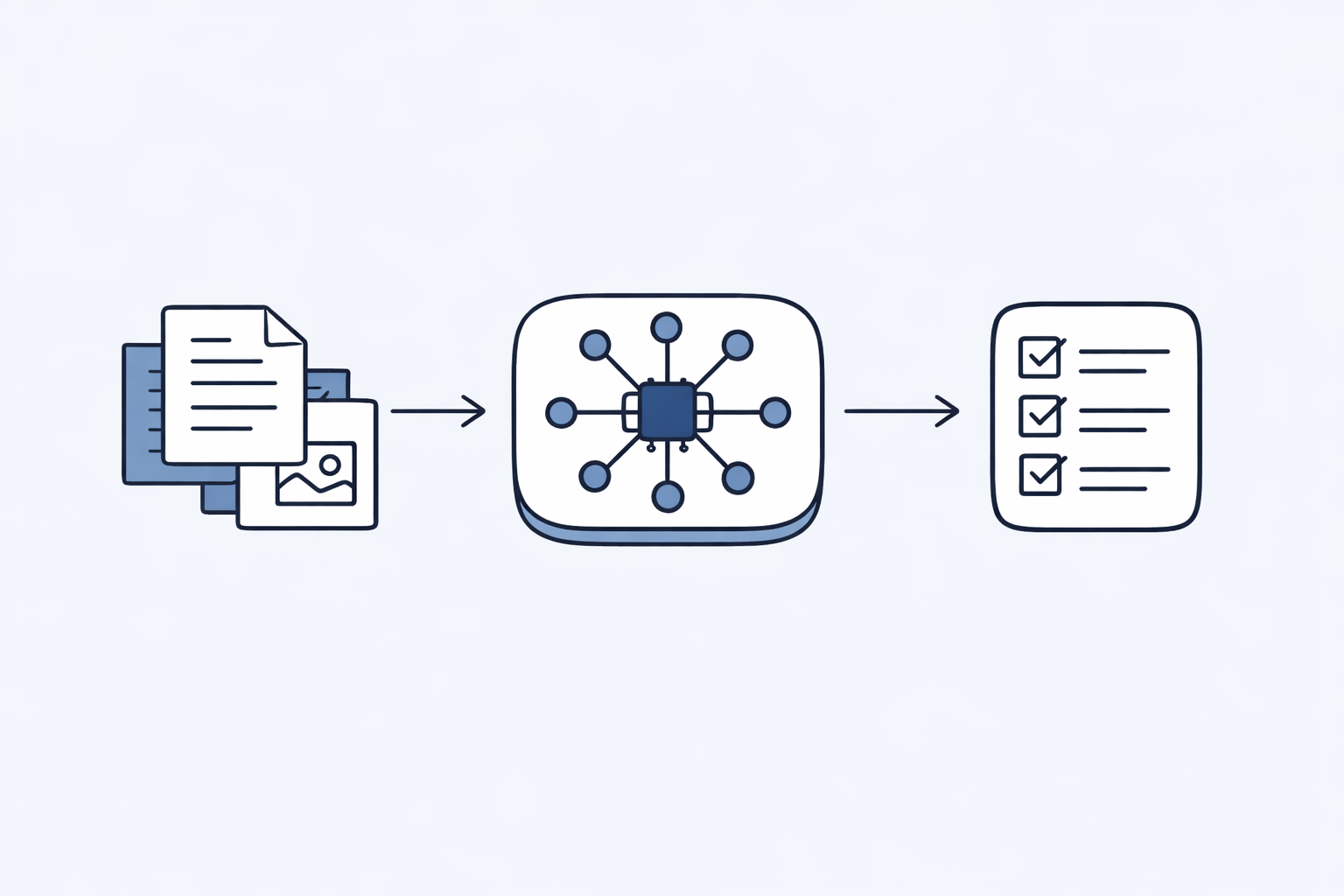
Need a starting point? Open Arthur & Co's back-office automation hub and choose the slowest recurring task.
The rule
If a task is frequent, rule-based, and painful when it slips, it should move to the top of the list. That means contract review, statement reconciliation, and document comparison usually beat one-off requests and vague “productivity” projects.
The question is not “can we automate this someday?” The question is “how much time are we losing every month while we wait?”
What goes first
In finance, Supplier reconciliation is a natural first win because the work repeats and the output is clear. In operations, Document comparison removes the slow version-comparison work that so often gets pushed to the side. In procurement and legal, Contract review catches the hidden changes that matter.
Those are good first bets because they are easy to understand and easy to measure.
What to leave for later
Leave rare, ambiguous, or one-off work for later. If the team only sees the task once in a while, or if the output depends on too much judgment too early, do not force automation just because you can.
That is how you get real adoption instead of a pile of half-used tools.
Conclusion
The best automation road map is not ambitious. It is selective. Pick the recurring work that costs real time, automate the first pass, and let the team feel the win quickly.
That is how you build momentum instead of another unfinished software project.
A practical order
If you need a working sequence, use this one.
- Start with the workflow that repeats most often.
- Next, choose the task with the clearest output.
- Then move to the workflow where delay is visibly expensive.
- Finally, connect the winning tasks into one shared back-office operating layer.
That order keeps the rollout grounded. It prevents the team from trying to automate everything at once and then stalling because the scope got too broad.
The three-bucket rule
When teams are not sure what to automate first, the work usually falls into three buckets.
Bucket one is repetitive and structured. That is where automation should start. Bucket two is judgment-heavy but repetitive enough to support a strong first pass. That is where human review stays in the loop. Bucket three is rare or messy. That is usually where you leave things alone for now.
This rule makes the decision easier. It removes the temptation to automate for the sake of novelty and focuses the team on processes that actually create drag.
Why this creates faster adoption
People adopt automation faster when it removes a delay they already notice in their day-to-day work. If the workflow still looks complicated after the first demo, the team will treat it as another tool to manage.
That is why the first win should be obvious. A contract is reviewed faster. A statement gets reconciled faster. A document comparison no longer blocks the next step. Once that happens, the team starts asking for the next workflow instead of resisting the change.
In other words, the best automation strategy is not the biggest one. It is the one that gives the team a visible win fast enough to matter.
Where the first win usually lives
The first win usually lives in the work that already frustrates the team the most. That is often the task that gets postponed, the task people complain about, or the task that creates the most follow-up messages.
When you automate that task first, the improvement is obvious. The team sees the queue move. Managers see fewer delays. And the business gets a concrete example of automation working without changing everything else.
That is the real purpose of the first project. It is not to prove the platform can do everything. It is to prove the team can rely on one important workflow for a consistent first pass and review.
Once that trust is in place, the next workflow gets easier. The business no longer has to debate whether automation works in theory. It has seen it work on a real, recurring task.
That proof is what unlocks the next move.
And that is how a small win becomes an operating system.
That is the kind of progress teams can build on.
It gives the team a real example they can use, repeat, and expand without turning automation into a big internal project.
fast.
That small proof is often enough to move the roadmap forward.