What Is a Multi-Agent AI Platform for SMEs?
One login. One invoice. Every back-office task automated.
You're juggling a contract analysis tool, an invoice automation platform, a document comparison service, and a receipt extraction app. That's 4 subscriptions, 4 logins, 4 separate invoices, and zero interoperability between them.
Your finance team uses one tool. Legal uses another. Operations uses a third. When you need to reconcile contract pricing against invoices - good luck connecting those dots across platforms.
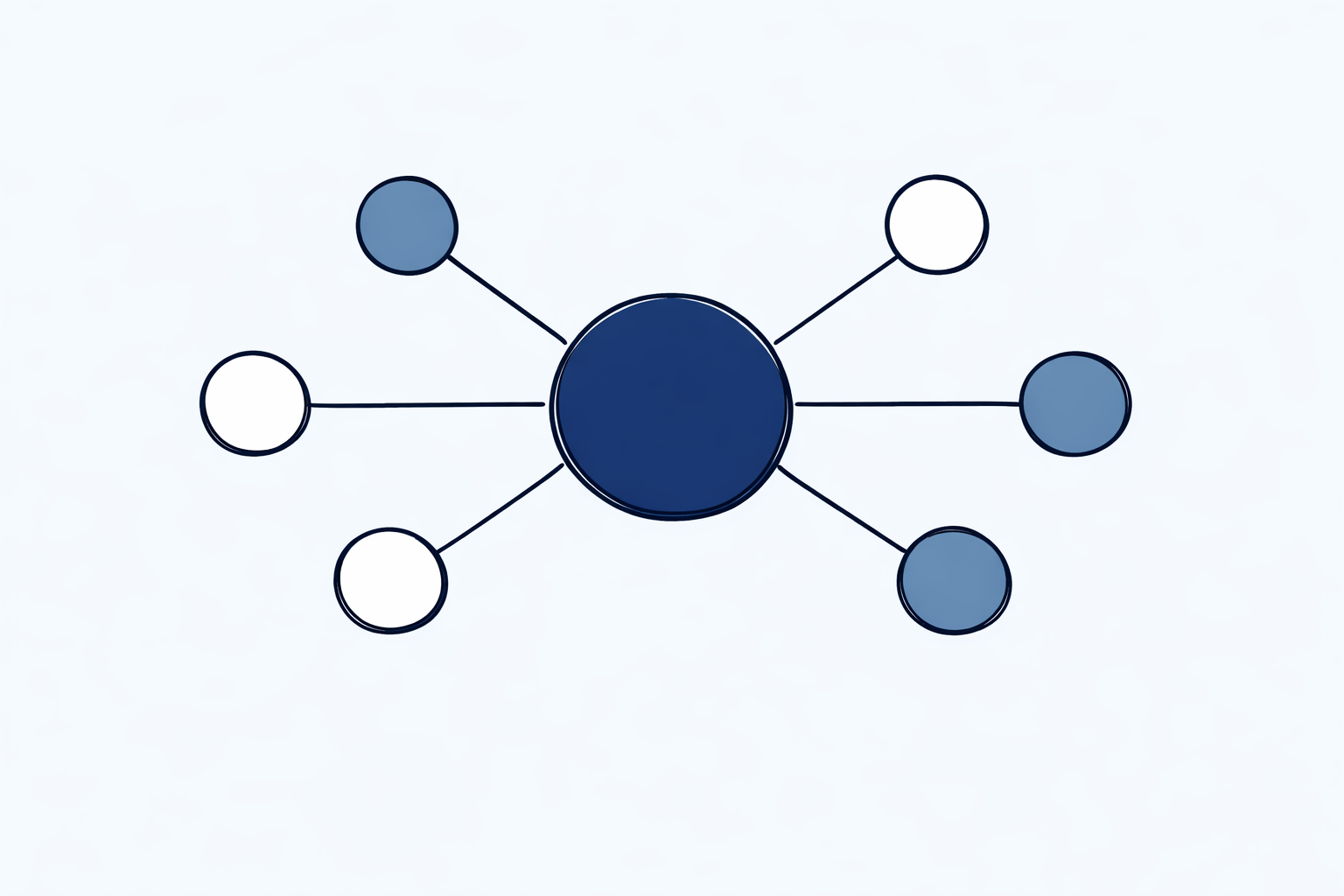
Multi-agent AI platforms solve this. One platform. Multiple specialized agents. Shared data. Unified billing.
Arthur & Co is a multi-agent platform built for SMEs - giving you specialized AI agents for finance, legal, operations, and HR from a single subscription.
Ready to consolidate your AI tools? Explore Arthur & Co's multi-agent platform and see which back-office workflows you can run from one platform.
The point solution problem
Most SMEs approach AI automation by solving one problem at a time.
The typical journey:
Month 1: "We need contract analysis."
→ Subscribe to a contract review tool
Month 3: "We need invoice automation."
→ Add an invoice matching or processing tool
Month 6: "We need document comparison."
→ Add a document comparison tool
Month 9: "We need receipt extraction."
→ Add a receipt extraction tool
Month 12: "This is getting expensive and messy."
Result:
- 4 subscriptions to manage
- 4 logins to remember
- 4 invoices to track
- 4 support contacts
- 4 different UIs to learn
- Separate tools with separate outputs to cross-reference
And when finance needs to verify that contract pricing matches invoice amounts? They manually cross-reference data from two separate platforms.
What is a multi-agent AI platform?
A multi-agent AI platform consolidates specialized AI agents into one unified system.
Instead of subscribing to separate tools for each use case, you get access to multiple agents from a single platform with shared infrastructure, billing, and data access.
The multi-agent model
One Platform:
- Single login (your team uses one credential system)
- Unified billing (one invoice, not five)
- Shared credit pool (allocate across agents based on need)
- Consistent UI (learn once, use across all agents)
Multiple Specialized Agents:
- Contract analysis agent (legal)
- Invoice error detection agent (finance)
- Document comparison agent (operations)
- Supplier reconciliation agent (finance)
- Receipt extraction agent (finance)
- Job description generator (HR)
Each agent is pre-configured for its specific task - but they all exist within one ecosystem.
How it differs from generic AI
Generic AI (ChatGPT, Claude):
- One general-purpose model
- You write prompts for every task
- Inconsistent outputs based on prompt quality
- No specialization, no structured data
- One-by-one processing
Point Solutions (Ironclad, Stampli, Draftable):
- Multiple separate platforms
- Each specialized for one task
- Consistent outputs within their domain
- But no interoperability between tools
- Separate subscriptions
Multi-Agent Platform (Arthur & Co):
- Multiple specialized agents in one platform
- Pre-configured workflows for each agent
- Consistent outputs across all agents
- Interoperable data (contract pricing → invoice verification)
- One subscription, shared credits
Arthur & Co's workflow portfolio
Arthur & Co organizes repeatable back-office jobs as defined workflows in one platform.
Available workflows
- Contract review and Contract comparison for single-contract analysis and two-contract comparison.
- Document review and Document comparison for business documents and version changes.
- Evidence review for checking questions or requirements against supporting evidence.
- Supplier reconciliation for comparing a supplier statement with the matching ledger export.
- Bank Statement Converter for turning bank-statement PDFs into CSV or XLSX data.
Invoice-to-PO matching, three-way matching, and receipt extraction are live workflows. Invoice matching requires an invoice and PO; three-way matching adds the delivery record.
The available workflows use the same account and shared platform, while each job keeps its own inputs, output, and review boundary.
The shared credit pool advantage
Multi-agent platforms use shared credits instead of per-tool pricing.
How shared credits work
Your subscription includes credits:
- Plans include a monthly credit allocation
- Credits can be used across available workflows
- See the pricing page for current plan names, credit amounts, and billing options
Use credits across any agent based on need:
Month 1 (Contract renewal cycle):
- Contract workflows (contract analysis): 50 credits
- Document workflows (document comparison): 30 credits
- Remaining for other agents: 20 credits
Month 2 (Supplier reconciliation heavy):
- Supplier reconciliation (supplier reconciliation): 60 credits
- Contract workflows: 20 credits
- Document workflows: 20 credits
Month 3 (Evidence and review cycle):
- Questions and evidence review: 70 credits
- Contract workflows: 15 credits
- Document workflows: 15 credits
Your workload changes month-to-month. Your credit allocation changes with it. No need to subscribe to each agent separately.
Compare: Point solutions vs multi-agent
Point Solutions Approach:
Each tool charges separately:
- Contract analysis tool
- Invoice processing or matching tool
- Document comparison tool
- Receipt extraction tool
Total: multiple fixed subscriptions to manage across the year, whether usage is even or not
Multi-Agent Platform (Arthur & Co):
One subscription with flexible allocation:
- Choose a plan from the current pricing page
- Use credits where you need them each month
- High contract month? Allocate more to contract workflows.
- High invoice month? Allocate more to invoice-to-PO matching, three-way matching, or supplier reconciliation as needed.
Operational comparison: one plan and one shared credit model can be simpler to manage than maintaining separate tools for contracts, documents, invoices, receipts, and reconciliation.
Why unified platforms beat platform sprawl
Point solutions create operational overhead beyond just cost.
Platform sprawl problems
Login fatigue:
Your finance manager needs to remember 5 different passwords. Your operations director has 7 browser tabs open just to access different AI tools.
Training overhead:
New employees need to learn several interfaces. Each tool has its own UX patterns, terminology, and workflows.
Support fragmentation:
Invoice processing issue? Contact vendor A. Contract analysis bug? Email vendor B. Document comparison question? Submit ticket to vendor C.
Data silos:
Contract pricing stored in tool A. Invoice data in tool B. Reconciling them requires manual exports and cross-referencing in Excel.
Billing complexity:
Finance receives multiple invoices from different vendors. Tracking budgets, reconciling payments, and managing renewals becomes administrative overhead.
Integration nightmare:
Want contract findings to inform invoice checks? With separate vendors, that often means exports, reformatting, and manual cross-referencing between systems.
Unified platform benefits
Single login:
Your team accesses all agents from one Arthur & Co account. One password. One credential management system.
Consistent UX:
Learn the Arthur & Co interface once. Every agent follows the same patterns. Upload files the same way. Download reports in the same formats.
Unified support:
One support contact. One knowledge base. One customer success team that understands your full workflow across all agents.
Shared data ecosystem:
Available workflows share one platform, but their outputs remain job-specific: contract findings, document findings, evidence coverage, or supplier-reconciliation exceptions.
Simple billing:
One invoice from Arthur & Co. One budget line item. One renewal date. Finance simplicity.
Zero integration work:
Agents exist in the same platform. No APIs to connect. No developer work. No integration costs.
Real scenario: connected workflows in action
Consider a vendor renewal. The team can review the renewal as one contract, compare it with the agreed version, and reconcile the supplier statement against the ledger. Each available workflow produces a separate, reviewable output.
- Use Contract review to identify review questions and clause-level findings in the renewal.
- Use Contract comparison to surface differences from the agreed version.
- Use Supplier reconciliation to compare the supplier statement with the matching ledger export and identify exceptions for review.
- Keep legal approval, supplier queries, and accounting decisions with the responsible people.
This is the practical benefit of a shared workflow platform: one account and a consistent experience across separate, reviewable workflow outputs.
When multi-agent platforms make sense
Multi-agent platforms aren't always the right choice. Here's when they make sense.
Choose multi-agent when:
You need automation across multiple departments:
Finance needs invoice processing. Legal needs contract analysis. Operations needs document comparison. HR needs job descriptions.
One platform covers all departments better than separate subscriptions.
Your workload fluctuates:
Heavy contract months followed by heavy reconciliation months. Shared credits adapt to shifting needs better than fixed per-tool pricing.
You're avoiding platform sprawl:
Already managing 10+ SaaS tools. Adding 5 separate AI tools creates operational overhead you'd rather avoid.
You value workflow integration:
Tasks that span multiple functions (contract pricing → invoice verification) benefit from agents that share data within one platform.
You have a small team:
Limited headcount means managing several separate tools is painful. One platform with multiple workflows is operationally simpler.
Stick with point solutions when:
You only need one specific function:
If contract analysis is your only automation need and you have zero plans to expand - a point solution for contracts makes sense.
You need deep specialization:
Some point solutions offer advanced features for specific niches (e.g., complex CLM workflow automation) that multi-agent platforms don't prioritize.
You already have integrated systems:
If you've invested heavily in integrating point solutions into your existing ERP/CRM - switching to a multi-agent platform might not justify the migration cost.
You're enterprise-scale with dedicated teams:
Large companies with dedicated finance, legal, and ops IT teams may prefer best-of-breed point solutions managed by specialists.
For SMEs that need several back-office workflows, a multi-workflow platform can reduce tool sprawl and simplify day-to-day operations.
Getting started with a multi-agent platform
Ready to consolidate your AI tools into one platform?
Step 1: Audit your current tools
List all AI/automation tools you currently use:
- Contract analysis: $________/month
- Invoice processing: $________/month
- Document comparison: $________/month
- Other tools: $________/month
Total monthly spend: $________
Step 2: Compare to Arthur & Co pricing
- See the pricing page for current plans
- Review the included credit allocation for each plan
- Compare billing options and workflow access in one place
Potential savings: $________ per month
Step 3: Test with real workload
Start with agents that match your highest-cost point solutions:
- Contracts → Contract workflows
- Documents → Document review
- Finance/ops → Additional agents launching soon
Upload a small set of real files to verify the workflows match your actual use cases.
Step 4: Migrate and consolidate
Once validated, cancel point solution subscriptions and migrate to Arthur & Co's multi-agent platform. Move data from siloed tools into one unified system.
Arthur & Co platform overview
Arthur & Co is a multi-agent AI platform for SMEs.
One platform. Multiple specialized agents across finance, legal, operations, and HR. Shared credit pool. Pre-configured workflows. File upload simplicity.
Stop juggling 5 separate tools. Get one unified platform that handles contract analysis, document comparison, invoice processing, reconciliation, and more.
Whether you're a small startup or a growing SME, Arthur & Co brings contract, document, invoice, receipt, reconciliation, and evidence-review workflows into one platform.
Try it: No credit card, simple subscription
Ready to consolidate your AI tools and eliminate platform sprawl?
Explore Arthur & Co's multi-agent platform and see which back-office workflows you can run from one subscription.
Start with live agents:
- Contract workflows for contract analysis
- Document comparison for document comparison
See the pricing page for current plans and access options.
Conclusion
Point solutions create platform sprawl. Five tools. Five logins. Five invoices. Five support contacts. No interoperability.
Multi-agent platforms consolidate specialized AI agents into one unified system. One platform. One subscription. Shared credits. Integrated workflows.
Arthur & Co brings together workflows for contracts, invoices, documents, reconciliation, receipts, and more in one platform with shared usage across jobs.
Stop juggling platforms. Start consolidating with AI.