Best practices for document-heavy workflows with AI
Document-heavy workflows break when the team tries to treat every file the same way. The better approach is to route each document to the right agent, keep the human on exceptions, and measure the work that disappears.
Want the operating model? Start at Arthur & Co's back-office automation hub and build the workflow from there.
Rule one: make the input obvious
If the input is messy, the output will be messy. So the first best practice is to standardize the file type, the naming, and the owner before you automate anything.
That is why file-first systems work so well. The user uploads the thing they already have, and the agent handles the repetitive first pass without asking the team to become prompt engineers.
Rule two: route by job to be done
A contract review is not a document comparison. A supplier statement is not a policy update. A revised SOP is not an invoice pack. Each one needs a different kind of first pass.
That is where Contract workflows, Supplier reconciliation, and Document review fit. They keep the workflow specific, so the output is easier to review and act on.
Rule three: keep the human where judgment matters
AI should remove the repetitive middle, not the final decision. Let the agent flag the likely issue, then let the person decide what to accept, escalate, or reject.
That keeps speed and control together. It also avoids the bad outcome where automation creates more follow-up work than it removes.
Conclusion
The best document-heavy workflows are not the most automated ones. They are the most focused ones.
Standardize the input, route by task, keep the exceptions human, and use the saved time to move faster everywhere else.
A simple workflow architecture
Most teams do better when they think about document automation in layers.
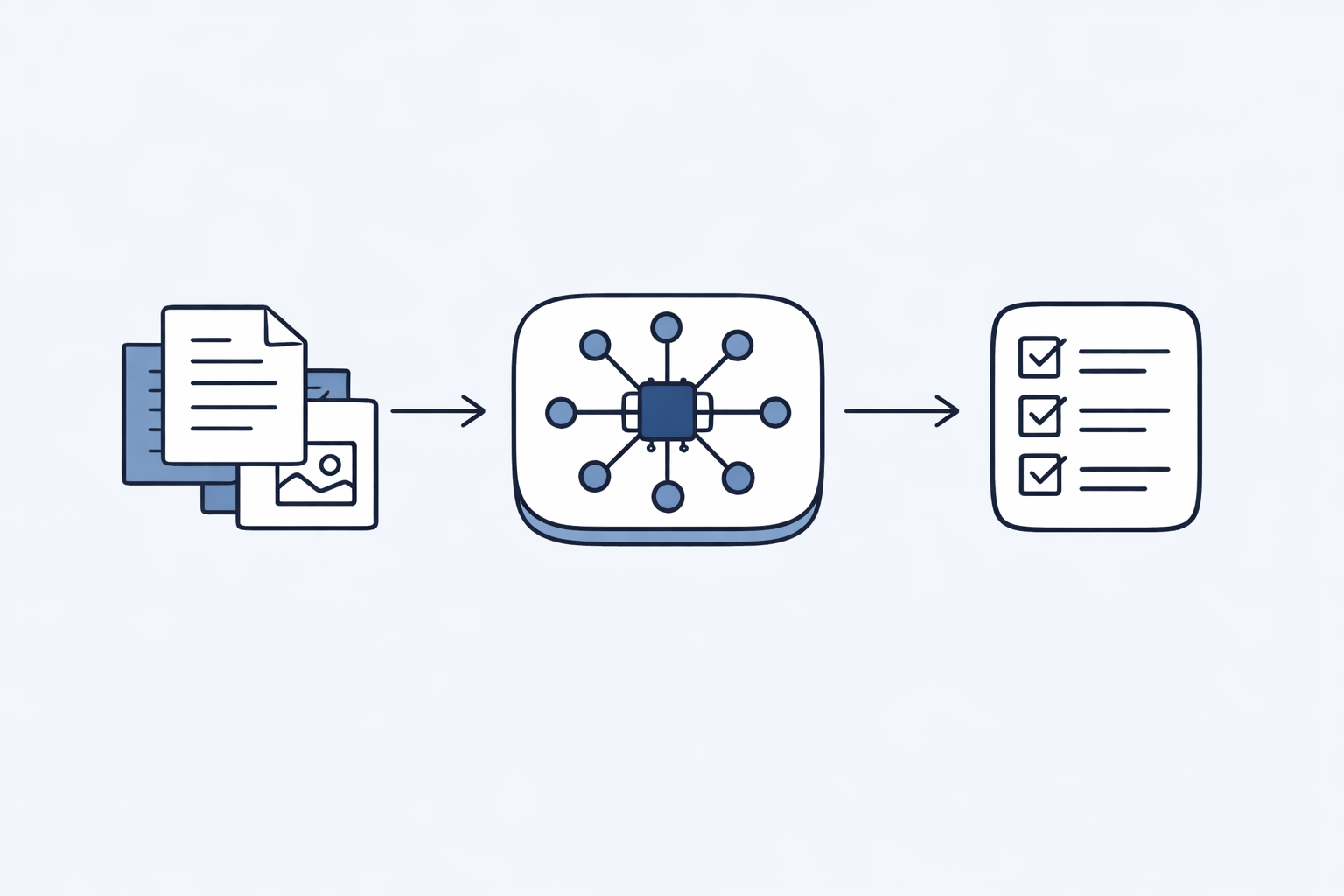
The first layer is intake. The team uploads the file and makes the source obvious. The second layer is routing. The right agent handles the right document type. The third layer is review. A human checks the exceptions, approves the result, or escalates the edge case.
That architecture is simple, but it is powerful. It removes ambiguity before the document reaches the review stage. That means fewer back-and-forth questions and fewer chances for a file to land on the wrong desk.
What to standardize
There are three things worth standardizing early.
- File naming
- Document type
- Review owner
If those three are clear, automation gets easier very quickly. Without them, every workflow becomes a custom problem and the team starts to lose confidence in the system.
This is especially important in SMEs, where the same person often owns multiple tasks. Standardization prevents every file from becoming a special case.
How to keep quality high
The biggest mistake in document automation is assuming speed and quality are opposites. They are not. Quality often improves when the first pass is consistent.
That is because people review a smaller, cleaner set of outputs. Instead of spending energy hunting for obvious issues, they spend it on judgment calls that matter.
The best teams keep a short feedback loop. They watch where the agent is accurate, where it needs correction, and which document types should stay human for now. That makes the system better without turning it into a project that never ends.
Why this matters for back office teams
Back office teams are often asked to move faster without more headcount. Document-heavy workflows are where that pressure becomes visible. When the queue is full, even a modest reduction in repetitive review work can make a noticeable operational difference.
If the team can route files, review exceptions, and skip repetitive first-pass work, they get capacity back without changing how the business is organised.
That is the real win. Not “AI everywhere.” Just fewer bottlenecks in the places where the business actually feels them.
The simplest way to start
Start with one document type, one owner, and one clear outcome. If that works, expand to the next type. If it does not, the problem is easy to diagnose because the scope stayed small.
This is the advantage of a focused agent workflow. It gives you a practical path from manual chaos to repeatable execution without building a giant internal project around it.
Why this approach lasts
This approach lasts because it respects how SME teams actually work. People are busy. They need to know where the file is, what happened to it, and what still needs judgment.
When the workflow answers those questions clearly, it gets used. And when it gets used, it keeps compounding.
That compounding effect is the point. Small process wins stack up into real operating leverage.